Bendición | High-Speed Medical Tube Extrusion Production Line
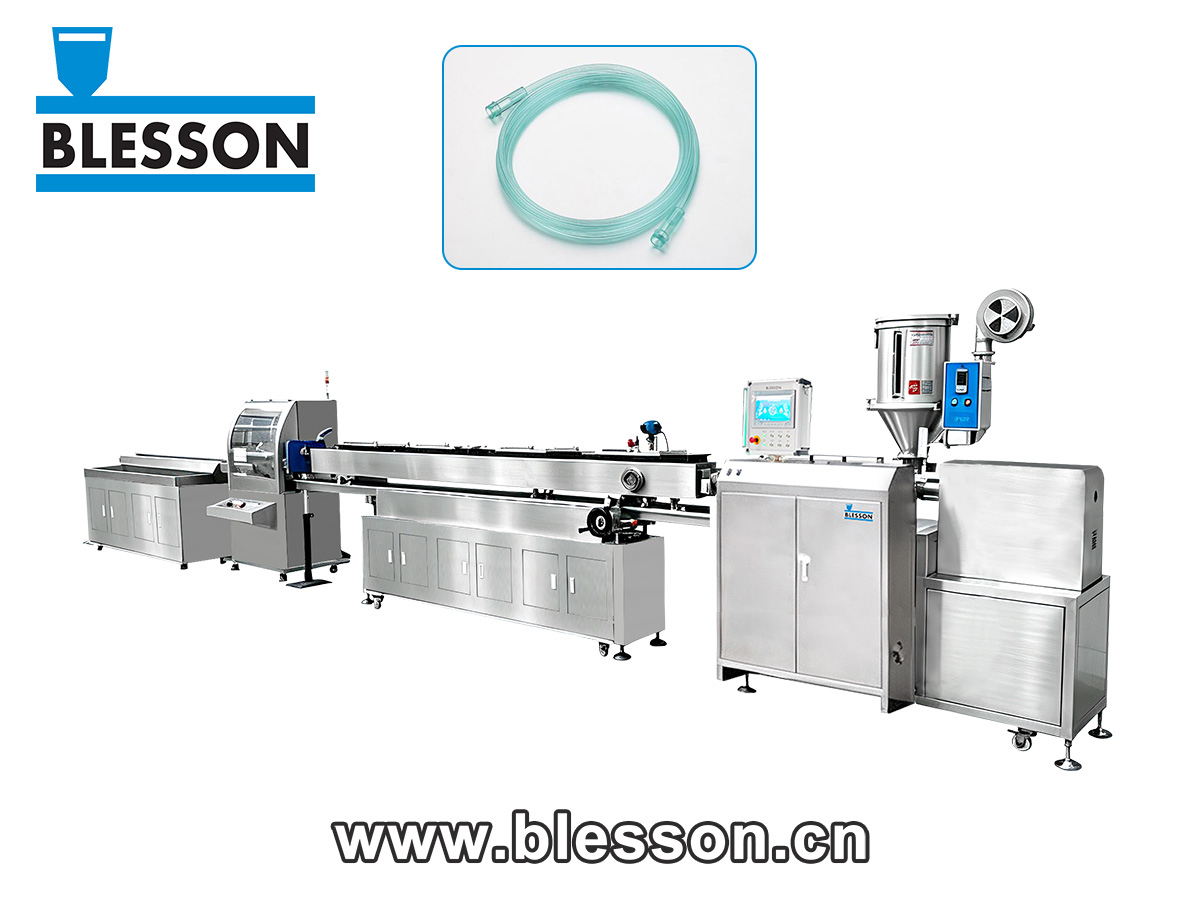
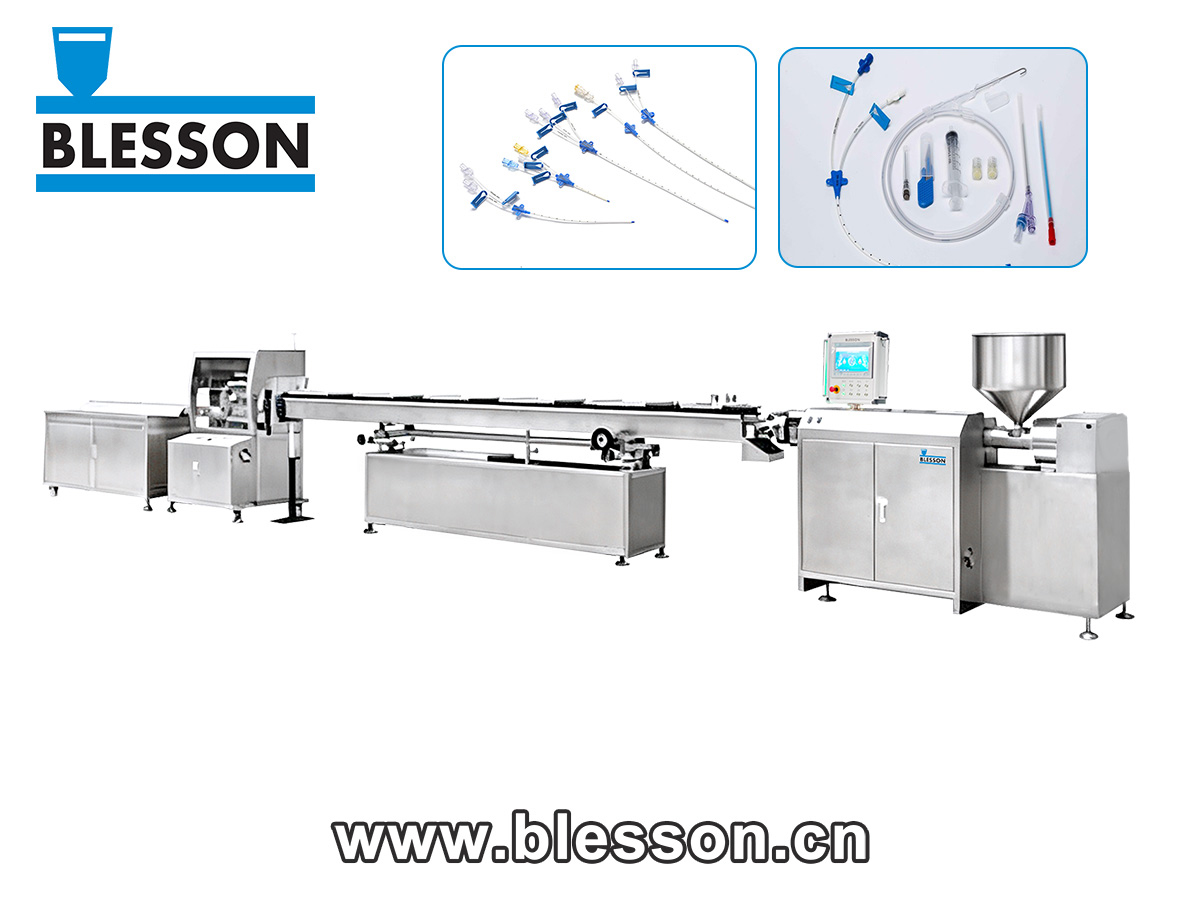
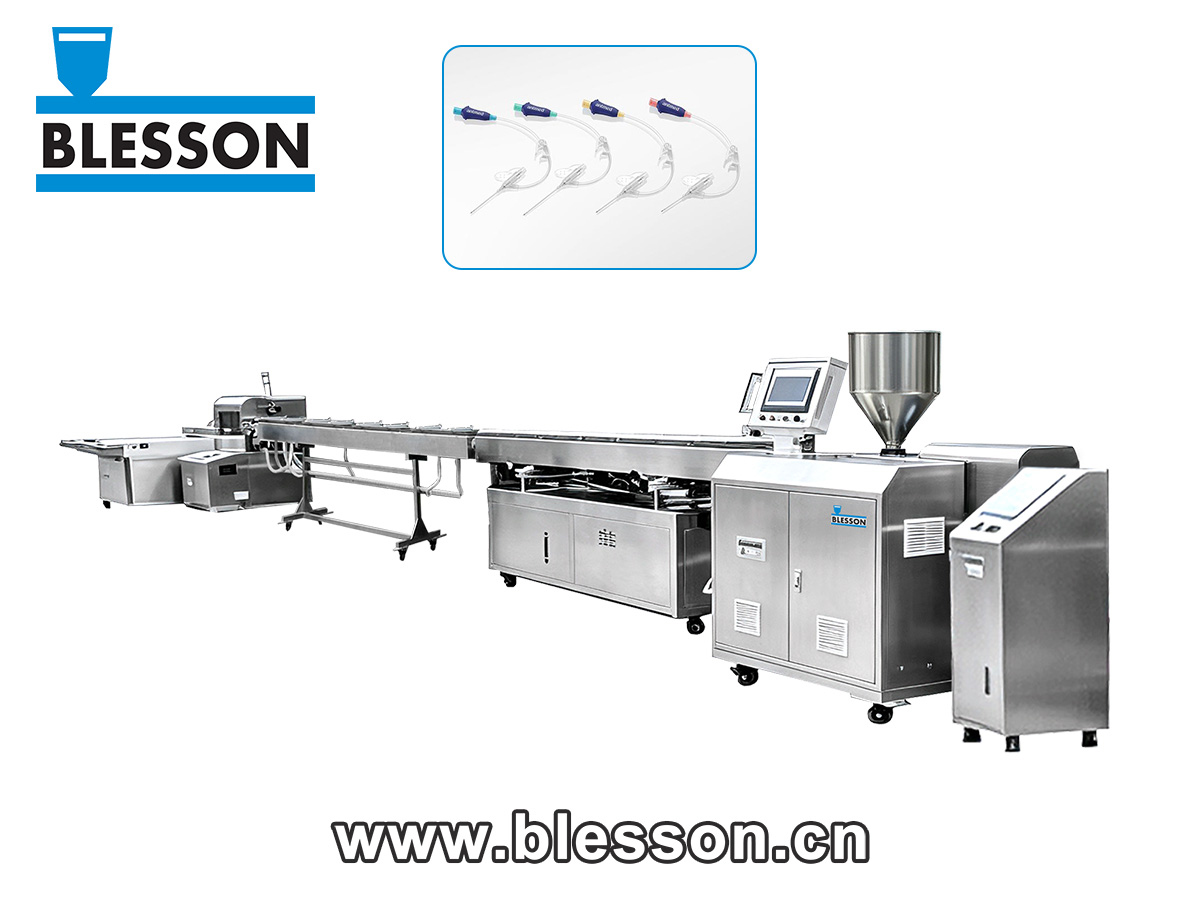
The Blesson high-speed medical tube extrusion production line is a dedicated extrusion system designed for the large-scale manufacturing of single-use medical hoses. Its core positioning is to continuously deliver conveyance-type hoses that meet medical cleanliness and dimensional accuracy requirements through stable high-speed operation. The line is compatible with flexible polymer materials such as medical-grade PVC and TPU, and is primarily intended for the volume production of single-use medical hoses including hemodialysis tubing, oxygen connection tubing, and suction connection tubing. In clinical settings, such hoses come into direct or indirect contact with body fluids and respiratory gases, imposing stringent requirements on material biocompatibility, wall uniformity, and lumen cleanliness.
一. Product Overview of the Blesson High-Speed Medical TubeExtrusion Production Line
The Blesson high-speed medical tube extrusion production line is a dedicated extrusion system designed for the large-scale manufacturing of single-use medical hoses. Its core positioning is to continuously deliver conveyance-type hoses that meet medical cleanliness and dimensional accuracy requirements through stable high-speed operation. The line is compatible with flexible polymer materials such as medical-grade PVC and TPU, and is primarily intended for the volume production of single-use medical hoses including hemodialysis tubing, oxygen connection tubing, and suction connection tubing. In clinical settings, such hoses come into direct or indirect contact with body fluids and respiratory gases, imposing stringent requirements on material biocompatibility, wall uniformity, and lumen cleanliness.
In terms of application scope, the conveyance-type hoses covered by this line represent a category with high consumption volume and relatively concentrated specifications within the medical consumables system. Hemodialysis tubing carries blood during extracorporeal circulation, while oxygen connection tubing and suction connection tubing serve respiratory support and secretion clearance scenarios. Together, these three categories constitute a fundamental consumables portfolio for hospital departments such as dialysis, respiratory care, and surgery. Through stable full-process control covering extrusion, sizing, acarreo, and cutting, the Blesson high-speed medical hose extrusion production line enables a single equipment platform to maintain consistent dimensional accuracy and surface quality across the above product categories, providing consumables manufacturers with repeatable and traceable batch manufacturing capability.
Blesson High-Speed Medical Tube Extrusion Production Line
二. Overview of the Blesson High-Speed Medical TubeExtrusion Production Line
(1)Core Configuration of the Blesson High-Speed Medical Tube Extrusion Production Line
The core configuration of the production line is built around four key processes: extrusion, sizing, acarreo, and cutting. Each stage is technically anchored in servo drive and closed-loop control.
1.The extrusion host is the starting point of the line and is responsible for uniform plasticization and stable output of medical-grade PVC and TPU materials. Given the thin wall and small dimensions of medical hoses, the host must meet precision extrusion requirements in screw design, temperature control zones, and melt pressure stability. In medical extrusion scenarios, melt pressure fluctuation typically needs to be controlled within 0.5 bar to prevent periodic wall thickness variation caused by pressure pulsation.
2.A closed-loop servo synchronization system runs through the entire line and serves as the foundation for “high speed without loss of control.” The haul-off section employs high-precision servo motors with speed fluctuation controlled below 0.1%, enabling the hose to maintain consistent linear speed during high-speed operation. The direct-drive structure reduces intermediate links in the transmission chain, which not only lowers speed deviation caused by mechanical wear but also fundamentally suppresses vibration and noise commonly associated with conventional belt or gear transmissions. This makes the overall machine cleaner and quieter in operation and directly suitable for the environmental requirements of cleanrooms.
3.The SUS304 sealed cooling water tank combined with negative-pressure sizing is the key to forming the geometric precision of the hose. After extrusion, the medical hose must rapidly enter the sizing and cooling stage. The water tank is made of SUS304 stainless steel, balancing hygiene grade and corrosion resistance. The fully sealed structure prevents external contamination from entering the cooling medium, while negative-pressure sizing causes the soft tube blank to uniformly conform to the sizing sleeve, thereby stably controlling hose roundness and wall thickness uniformity under high-speed haul-off conditions. Some comparable production lines also incorporate pre-lubricated cooling or laminar-flow cooling designs in the water tank to further reduce friction between the hose wall and the sizing sleeve and prevent thin-walled hoses from collapsing or being scratched at high speed.
4.The haul-off and cutting unit is precisely regulated by a servo system. The haul-off speed is closed-loop linked with the extrusion speed to ensure that the hose runs under constant tension. The cutting mechanism is triggered in synchronization with the haul-off action, producing flat cuts without burrs and avoiding subsequent assembly sealing failures or particle shedding caused by cutting defects. Cutting length can be digitally set via the human-machine interface to accommodate fixed-length requirements of products with different specifications.
(2)Overall Advantages of the Blesson High-Speed Medical Tube Extrusion Production Line
1.Clean design and workshop compatibility.From the frame to the sizing water tank in contact with the hose, the entire machine is constructed of stainless steel hygienic-grade materials. The direct-drive structure reduces exposed transmission components and lowers the risk of dust accumulation and lubricating oil contamination. This design orientation enables the line to be deployed in cleanrooms compliant with GMP requirements, matching the cleanliness management logic of medical consumables production.
2.Dimensional stability under high-speed operation.The core quality indicators of medical hoses—outer diameter tolerance, wall thickness uniformity, and roundness—are susceptible to multiple disturbances during high-speed extrusion, including haul-off fluctuation, uneven cooling, and melt pressure variation. Through closed-loop servo synchronization, the line compresses haul-off speed fluctuation to an extremely low level. Combined with uniform cooling via negative-pressure sizing, the hose achieves increased line speed without sacrificing dimensional accuracy. Comparable precision medical tube production lines typically control outer diameter tolerance within the range of ±0.01 mm to ±0.05 mm, with wall thickness covering common medical hose specifications from 0.1 mm to 3.0 milímetro. This means that capacity improvement is not achieved at the expense of relaxed tolerances, and the line can continuously output qualified hoses with controllable dimensions at relatively high line speeds.
3.Balance between capacity and specification flexibility.High-speed extrusion capability directly translates into a substantial increase in output per unit time, while the rapid mold change mechanism allows the same line to switch between different pipe diameter specifications. Modular die head and sizing sleeve designs make mold changes and specification changes more efficient, reducing downtime for adjustment and providing equipment-level flexibility for multi-variety, batch production of medical hoses.
4.Verifiability oriented toward medical standards.The design logic of the production line does not stop at “being able to extrude tubing” but is directed toward “stably producing conveyance-type hoses that meet medical standards.” Medical hose production involves ISO 10993 biocompatibility evaluation, USP Class VI material compliance requirements, and other standards. Some export-oriented production lines also need to satisfy ISO 13485 quality management system and GMP environmental specifications. The equipment’s configuration in material selection, clean structure, and process parameter controllability provides the equipment foundation for downstream consumables manufacturers to complete product validation and regulatory compliance.
(3)Blesson Customized Services
As a national high-tech enterprise and a national-level specialized, refined, distinctive and innovative “Little Giant” enterprise focusing on extrusion equipment for medical and hygiene materials, Blesson possesses customized delivery capabilities ranging from single machines to complete lines and from standard models to process adaptation. Customized services are provided at three levels:
1.Customization of pipe diameter and specifications. Molds are specifically designed or selected according to the pipe diameter, Espesor de la pared, and length specifications of the customer’s target products, so that the production line is aligned with the customer’s actual product portfolio upon delivery, rather than requiring the customer to accommodate the fixed specifications of the equipment.
2.Material and process adaptation. Medical hose raw materials include PVC, TPU, and other flexible polymer materials in certain scenarios. Different materials exhibit differences in plasticization characteristics, melt strength, and cooling behavior. Customized services include adjusting screw configuration, temperature control curves, and sizing parameters according to the customer’s raw materials, enabling the equipment to achieve a stable process window within a specific material system.
3.Production line configuration and subsequent expansion. Customers may select options in haul-off configuration, cutting method, in-line inspection modules, and winding/conveying units according to production scale, cleanroom conditions, and automation requirements. The modular design also reserves interfaces for subsequent specification expansion, product structure switching, or integration with upstream and downstream automation links, enabling the production line to expand progressively in line with the evolution of the customer’s product portfolio rather than being fixed once and for all.
Compartir con:
Formulario de consulta ( nos volvemos a usted tan pronto como sea posible )